
Catedral Metropolitana de Santiago de Chile
General Information
Denomination
Catholic
Address
498 Santiago
Santiago, Metropolitana de Santiago, Chile
C.P. 8320202
Location
Find the approximate location of Catedral Metropolitana de Santiago de Chile
Location data: © OpenStreetMap contributors via LocationIQ | Visualization: Google Maps
How to Get There
Address: 498 Santiago Santiago, Metropolitana de Santiago, Chile
About Catedral Metropolitana de Santiago de Chile
📜 History
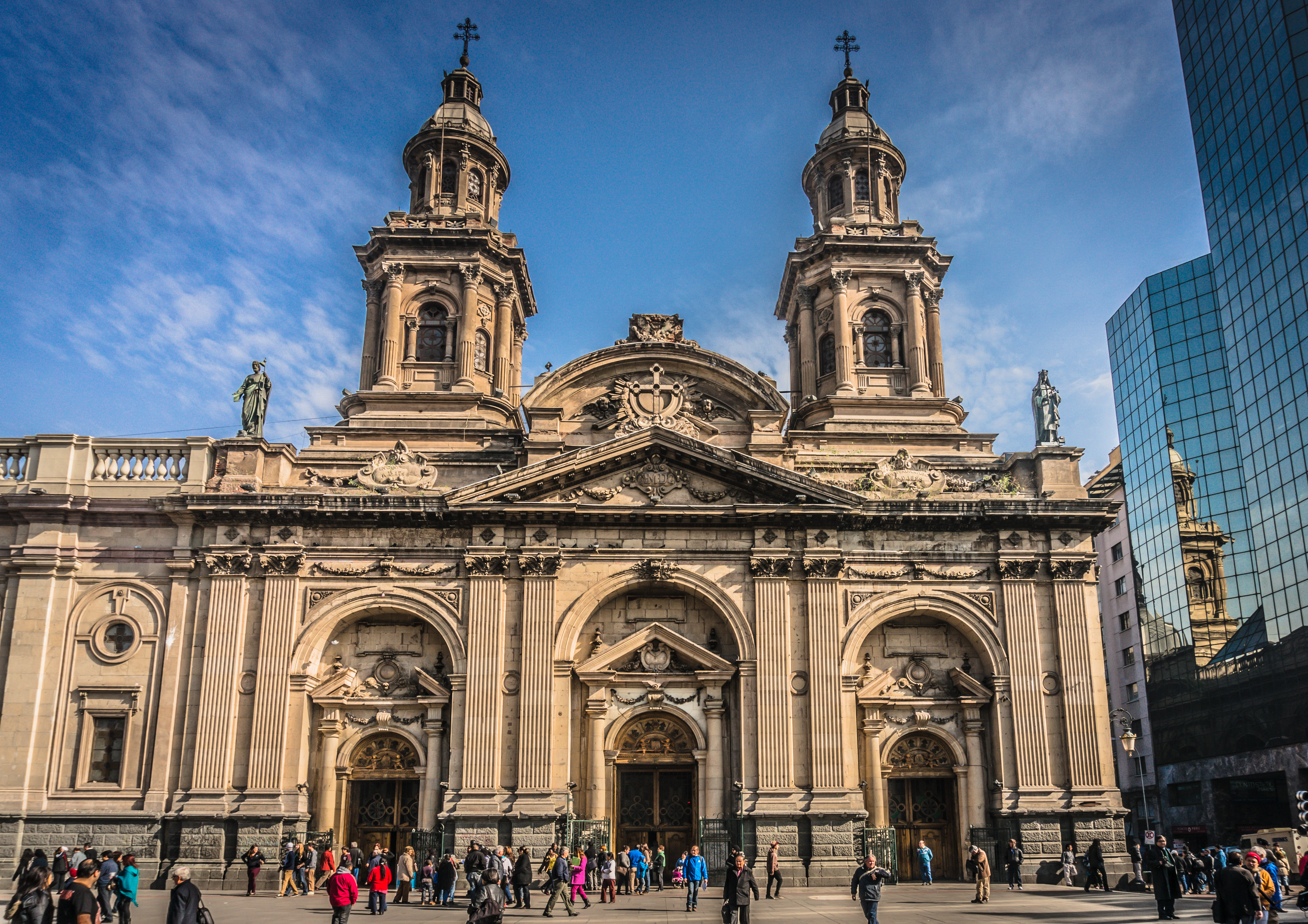
The Metropolitan Cathedral of Santiago has its origins in the very founding of the city. After the establishment of Santiago in 1541, a first church was built on the western side of the Plaza de Armas, which was rebuilt several times due to the earthquakes of 1647 and 1657. On December 22, 1769, a fire destroyed the building then in use, which accelerated the construction of the current temple. The first stone of the new building was laid on July 1, 1748, and the works progressed under the direction of successive architects for more than five decades. On December 8, 1775, the temple partially opened its doors for worship, and the complex was practically completed around 1800. In 1840, it was elevated to the rank of metropolitan cathedral, consolidating its position as the archiepiscopal see of Chile. Between 1846 and 1849, the Chapel of the Sagrario was built and the organ was installed. At the end of the 19th century, between 1898 and 1906, the architect Ignacio Cremonesi directed a major renovation. The earthquake of February 27, 2010, caused damage that was addressed in a comprehensive restoration carried out between February and July 2014.
🏛️ Architecture
The building is an example of the Neoclassical style in South America. The rectangular floor plan measures approximately 100 meters in length by 45 meters in width, with an area of about 4,500 square meters. The interior structure is organized into three naves: a central one and two lateral ones, with columns that articulate the space and direct the view toward the main altar. The main facade, facing the Plaza de Armas, presents a composition of pilasters, arches, and pediments characteristic of the Neoclassical language. Several architects were involved in the execution of the project throughout the 18th and 19th centuries: Pedro Vogl and Juan Hagen in the initial stages, followed by Matías Vásquez de Acuña and the Italian Joaquín Toesca, who also designed the Palacio de La Moneda. At the beginning of the 20th century, Ignacio Cremonesi carried out interventions that gave the temple its definitive appearance. The cathedral is part of an architectural complex that includes the Palacio Arzobispal and the Parroquia del Sagrario, all arranged around the Plaza de Armas of Santiago.
⭐ Key Facts
The cathedral is the seat of the Archdiocese of Santiago and the main temple of the Catholic Church in Chile. It is consecrated to the Assumption of the Virgin Mary. Its liturgical function remains active with regular masses throughout the week, and the site has been the setting for religious and civil ceremonies of national scope throughout its history. In the underground crypts rest the remains of numerous bishops and archbishops of Santiago, as well as historically significant political figures, including Diego Portales and former president José Tomás Ovalle. The building houses the Museo de Arte Sagrado, which preserves pieces of goldsmithing, painting, and religious sculpture from the colonial and republican periods. On July 6, 1951, through Supreme Decree No. 5058, it was declared a National Historic Monument, a recognition that protects both the building and the surrounding architectural complex. Its location in the Plaza de Armas of Santiago, the historic and civic center of the capital, makes it a permanent reference of Chilean cultural heritage.
Located facing the Plaza de Armas of Santiago, the cathedral receives visitors from Monday to Friday between 10:00 and 19:00, on Saturdays until 14:30, and on Sundays until 13:30. The temple offers daily masses, and its interior spaces allow visitors to explore centuries of Chile's architectural and religious history. The visit to the Museo de Arte Sagrado, integrated into the same building, complements the tour with a collection of colonial and republican art.
✍️ Curated by Benjamín Restrepo
·
Last updated:
Information verified by the EncuentraIglesias editorial team
📚 Readings to strengthen your faith
Articles from the Faith & Life blog selected for this community




Did you notice something incorrect?😯
We apologize 🙏. Being the most complete church directory in the world requires a lot of time and effort... and only God is perfect 😄! We would greatly appreciate it if you help us with your suggestions to keep the information verified and reliable.
You can send us your observations, suggest corrections or even request that we remove this record if you consider it does not correspond to a church.
Suggest an edit