
In the early morning hours of a quiet Tuesday in Boonville, New York, an explosion shattered more than just windows and walls - it tested the very foundation of a church community's faith. Abundant Life Fellowship Church, a beacon of hope in the small upstate town, was reduced to rubble in moments. Yet from the debris and devastation emerged a powerful testimony of unwavering faith and unbreakable mission.
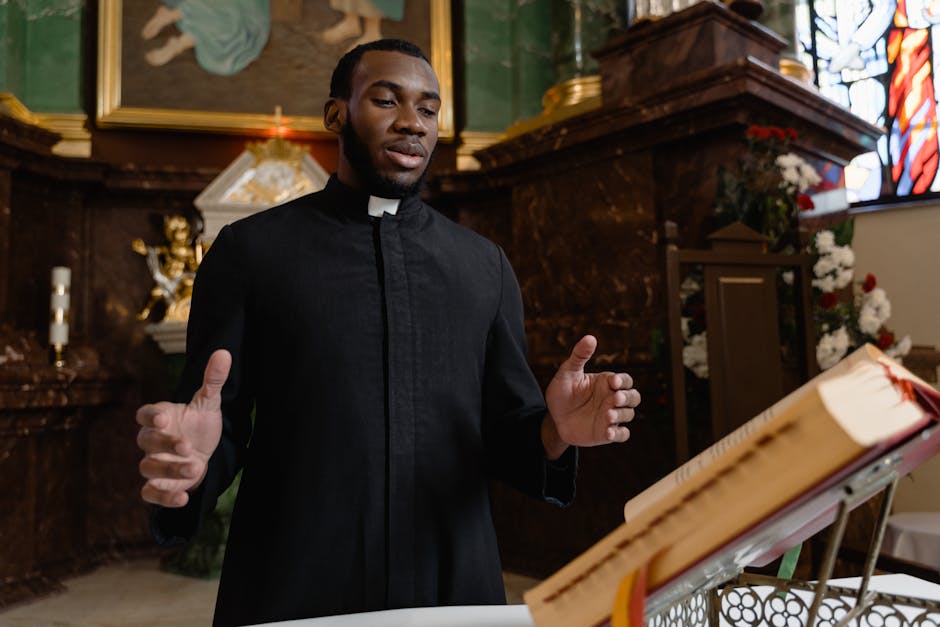
"We are hard pressed on every side, but not crushed; perplexed, but not in despair; persecuted, but not abandoned; struck down, but not destroyed." - 2 Corinthians 4:8-9
The Day Everything Changed
Pastor Brandon Pitts was preparing for what he thought would be an ordinary day of ministry when the unthinkable happened. The explosion, later determined to be caused by a gas leak, completely leveled the church building that had served as a spiritual home for hundreds of congregants. The force of the blast was so powerful that it shattered windows in neighboring buildings and could be heard miles away.
Pastor Pitts, who was injured in the explosion, was rushed to the hospital with serious but not life-threatening injuries. From his hospital bed, bandaged and bruised, he did something that would define not only his character but the character of his entire congregation: he refused to let despair have the final word.
"We have not lost our mission," Pastor Pitts declared to his worried congregation members who had gathered at the hospital. "Our building may be gone, but we are still standing. Our church was never about bricks and mortar anyway - it was always about people and purpose."
Understanding True Church
The explosion at Abundant Life Fellowship serves as a powerful reminder of what the church really is. In our modern context, it's easy to confuse the church building with the Church itself. We invest millions of dollars in beautiful sanctuaries, state-of-the-art sound systems, and comfortable seating, sometimes forgetting that the early Christians met in homes, caves, and open fields.
"For where two or three gather in my name, there am I with them." - Matthew 18:20
Pastor Pitts' immediate response reflected a deep theological understanding that many church leaders would do well to remember: the church is not a place we go, but a people we are. The explosion destroyed a building, but it could not touch the living stones that make up the true temple - the believers themselves.
"When I saw our building in ruins, my first thought wasn't about insurance claims or rebuilding plans," Pastor Pitts later reflected. "It was about our people. Were they okay? How could we continue to serve them? How could we make sure this tragedy brought us closer together instead of driving us apart?"
Community Response: Love in Action
The response from both the Abundant Life congregation and the broader Boonville community was nothing short of miraculous. Within hours of the explosion, offers of help began pouring in from neighboring churches, local businesses, and community members who may have never set foot inside Abundant Life Fellowship but recognized the importance of what it represented.
Grace Methodist Church, located just a few miles away, immediately offered their sanctuary for Abundant Life's upcoming Sunday service. St. Mary's Catholic Church provided meeting space for small groups and Bible studies. The local elementary school opened its gymnasium for large gatherings and community events.
"This is what the body of Christ looks like," marveled Sarah Henderson, a longtime member of Abundant Life. "Denominational differences didn't matter. Theological disagreements were set aside. Everyone just wanted to help us continue our ministry."
Lessons from the Rubble
As Pastor Pitts recovered from his injuries and began the complex process of leading his congregation through this unprecedented crisis, several profound lessons emerged from the ashes:
1. Mission Transcends Buildings
The explosion forced Abundant Life Fellowship to rediscover their core mission without the familiar framework of their building. Food pantries continued operating from a borrowed warehouse. Counseling services moved to a community center. Youth group met in members' homes. Rather than hindering their ministry, the displacement seemed to energize it.
"We realized we had maybe become too comfortable in our beautiful building," admitted longtime member Tom Rodriguez. "Being forced out into the community helped us remember that ministry happens everywhere, not just within four walls."
2. Adversity Reveals Character
Crisis has a way of stripping away pretense and revealing what people are really made of. For Pastor Pitts and his congregation, the explosion revealed a depth of faith and resilience that perhaps they didn't even know they possessed.
"Consider it pure joy, my brothers and sisters, whenever you face trials of many kinds, because you know that the testing of your faith produces perseverance." - James 1:2-3
"I've been a Christian for thirty years, but I've never seen faith like this," said Maria Santos, a newer member of the congregation. "Watching Pastor Pitts speak words of hope while still bandaged from the explosion, seeing families who lost their spiritual home immediately start talking about how God would use this for good - it changed my understanding of what real faith looks like."
3. God's Presence in Catastrophe
Perhaps the most powerful testimony to emerge from the explosion was the consistent witness from church members that they sensed God's presence more keenly in the aftermath than they had in months of regular services. This wasn't about finding easy answers or quick explanations for why bad things happen, but about discovering that God's presence is not dependent on our circumstances.
"I won't pretend to understand why this happened," Pastor Pitts explained during his first sermon after the explosion, delivered from the borrowed sanctuary of Grace Methodist. "But I can testify that God has been more real to me in this hospital bed and more present with us in these difficult days than He was in our comfortable pews."
Practical Faith in Crisis
The response of Abundant Life Fellowship offers practical lessons for any church or organization facing unexpected crisis:
Immediate Communication: Pastor Pitts and his leadership team prioritized getting accurate information to their congregation quickly, preventing rumors and speculation from creating additional anxiety.
Focus on People, Not Property: While insurance and rebuilding conversations were necessary, the primary focus remained on the spiritual and emotional well-being of the congregation.
Accept Help Gracefully: Rather than trying to handle everything internally, the church leadership gratefully accepted offers of assistance from the broader community, creating new relationships and partnerships.
Maintain Regular Ministry: Despite the disruption, weekly services, small groups, and pastoral care continued without interruption, providing stability during an unstable time.
Look for Opportunities: Instead of viewing the explosion as purely negative, church leaders actively sought ways that God might use this crisis for ministry expansion and community impact.
Rebuilding with Purpose
As discussions about rebuilding began, Pastor Pitts and the congregation approached the process with a different perspective than they might have before the explosion. Rather than simply trying to recreate what they had lost, they began asking deeper questions about what God might be calling them to become.
"We're not just rebuilding a building," Pastor Pitts explained to a local reporter. "We're rebuilding with intentionality. We're asking questions like: How can our new space better serve our community? What ministries might God be calling us to that we never considered before? How can we design our building to remind us that we are the church, not the building we meet in?"
"Unless the Lord builds the house, the builders labor in vain." - Psalm 127:1
A Living Testament
Months later, as reconstruction plans took shape and the congregation continued to thrive in their temporary locations, the explosion at Abundant Life Fellowship had become more than just a tragic accident - it had become a powerful testament to the resilience of faith and the true nature of the church.
Visitor numbers actually increased during this period, as people from the community and surrounding areas came to see for themselves what this "church without a building" was all about. Many discovered that they were witnessing something rare in our modern context: a faith community that truly lived out its belief that the church is not defined by its facilities but by its faithfulness.
"We have not lost our mission," Pastor Pitts had declared from his hospital bed on that devastating day. Months later, those words proved to be prophetic. Not only had they not lost their mission - they had found it more clearly than ever before.
The explosion that was meant to destroy had instead revealed the indestructible nature of true Christian community. The blast that shattered walls had broken down barriers. The disaster that could have ended their ministry had expanded it beyond anything they had previously imagined.
As Pastor Pitts often reminds his congregation now, "Buildings can be destroyed by explosions, but the church is built on the Rock that cannot be shaken. We are still standing because we stand on Him."


Commentaires