
In a world that prizes independence, self-sufficiency, and the freedom to choose without constraint, motherhood stands as a quiet but powerful counter-narrative. It is not that mothers lose their autonomy, but rather that they enter into a new kind of freedom—one shaped by love and responsibility. The early years of motherhood, in particular, are marked by a profound dependence: the baby depends on the mother for everything, and the mother, in turn, depends on God, her community, and even her own reserves of patience and grace.
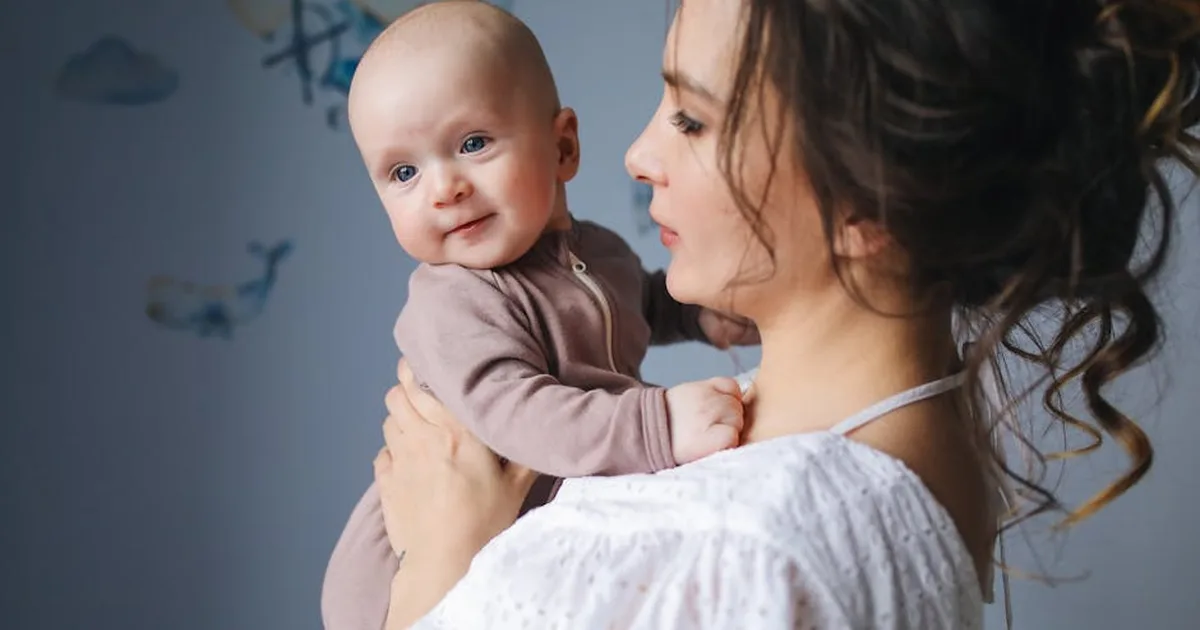
This dependence flies in the face of modern ideals. We are taught to value our ability to make choices, to control our circumstances, and to define ourselves on our own terms. Yet motherhood reminds us that some of the most meaningful aspects of life are not chosen but received. A child is a gift, not a project; a mother’s love is a response, not a plan. As the psalmist writes, “Behold, children are a heritage from the Lord, the fruit of the womb a reward” (Psalm 127:3, ESV). This perspective reframes motherhood not as a limitation but as a sacred trust.
The Myth of Total Control
Our culture often promotes a myth of total control—that we can shape our lives exactly as we wish if we just work hard enough. Motherhood shatters that illusion. No amount of planning can prepare a mother for the sleepless nights, the sudden illnesses, or the unpredictable emotions of a growing child. In these moments, mothers learn a deeper truth: that control is an illusion, and surrender is a form of strength.
The apostle Paul understood this paradox. In 2 Corinthians 12:9, he writes, “But he said to me, ‘My grace is sufficient for you, for my power is made perfect in weakness.’” Motherhood is a school of weakness—not weakness as failure, but weakness as openness to God’s power. When a mother admits she cannot do it all, she makes room for grace. When she asks for help, she builds community. When she rests in God’s provision, she models faith for her children.
Letting Go of Perfection
One of the greatest pressures on modern mothers is the pursuit of perfection. Social media, parenting books, and well-meaning relatives all offer conflicting advice, leaving many mothers feeling inadequate. But the Bible offers a different standard. In Proverbs 31, the virtuous woman is not perfect; she is diligent, wise, and faithful. She fears the Lord, and that is her foundation. Mothers today can take comfort in knowing that God does not demand perfection—He desires faithfulness.
This means letting go of the guilt that so often accompanies motherhood. A mother’s love is not measured by the cleanliness of her home or the achievements of her children. It is measured by the daily sacrifice of self, the prayers whispered in the night, and the steady presence that says, “I am here.” As Jesus said, “Come to me, all who labor and are heavy laden, and I will give you rest” (Matthew 11:28, ESV). That invitation extends to every weary mother.
Redefining Choice
Our culture celebrates choice as the highest good. But motherhood redefines what choice means. A mother may choose to stay home, work part-time, or pursue a career—but each choice is made in the context of another’s needs. This is not a loss of freedom but a transformation of it. The choices that matter most are not those that maximize personal convenience but those that nurture life and love.
Consider Mary, the mother of Jesus. When the angel Gabriel announced that she would bear the Son of God, she could have said no. Instead, she responded, “Behold, I am the servant of the Lord; let it be to me according to your word” (Luke 1:38, ESV). Mary’s choice was not about autonomy; it was about surrender to a greater purpose. Her motherhood changed the world because she embraced a calling larger than herself.
Choosing Sacrifice
Every mother knows that love requires sacrifice. The late nights, the missed opportunities, the financial pressures—all are part of the journey. But sacrifice is not the enemy of joy; it is often the path to it. Jesus said, “Greater love has no one than this, that someone lay down his life for his friends” (John 15:13, ESV). Mothers lay down their lives daily, not in a single dramatic act but in countless small acts of service. This is the essence of Christian love.
In a culture that tells us to prioritize ourselves, motherhood calls us to prioritize others. This does not mean neglecting one’s own needs—self-care is important—but it does mean recognizing that fulfillment is found in relationship, not in isolation. The family is a school of love, and mothers are its primary teachers.
A Community of Support
No mother is meant to walk this path alone. The early church modeled a community where believers shared burdens and supported one another. In Galatians 6:2, Paul instructs, “Bear one another’s burdens, and so fulfill the law of Christ.” For mothers, this means reaching out to other mothers, joining church groups, and accepting help when it is offered. It also means creating spaces where mothers can be honest about their struggles without fear of judgment.
EncuentraIglesias.com is committed to helping families find faith communities that offer this kind of support. Whether through small groups, parenting classes, or simply a listening ear, the church can be a lifeline for mothers. As the body of Christ, we are called to encourage one another and build each other up (1 Thessalonians 5:11).
The Role of Fathers and Extended Family
While this article focuses on motherhood, it is important to recognize that mothers do not carry the burden alone. Fathers, grandparents, and the wider community all play vital roles. The Bible speaks of the importance of family and the responsibility of fathers to provide and nurture (Ephesians 6:4). A healthy family is a partnership, and the church should support that partnership through teaching and practical resources.
In many cultures, extended family is a key part of child-rearing. Grandmothers offer wisdom, aunts provide extra hands, and cousins become playmates. This intergenerational support reflects the biblical vision of a community where “the older women teach what is good” (Titus 2:3-4). Modern mothers can seek out these relationships, even if they are not biological, by building intentional connections with older women in their faith communities.
Practical Reflections for Today
As we consider the countercultural nature of motherhood, let us ask ourselves: How can we as individuals and as a church better honor and support mothers? How can we create a culture that values dependence on God and community, rather than celebrating isolated autonomy?
For mothers reading this, take heart. Your work is holy. The sleepless nights, the endless laundry, the patient teaching—all of it is seen by God. He who sees the sparrow fall sees your every act of love. Rest in His grace, and know that you are not alone. For those who are not mothers, consider how you can come alongside the mothers in your life. A meal, a listening ear, or a simple word of encouragement can make a world of difference.
Let us pray: Lord, thank you for the gift of mothers. Give them strength for each day, wisdom for each decision, and peace that passes understanding. Help us to support them and to learn from their example of sacrificial love. In Jesus’ name, Amen.




Comentarios