
The archaeological site of Kuntillet 'Ajrud has generated more scholarly debate per square meter than perhaps any other biblical archaeology discovery of the past century. Located in the remote Sinai desert, this eighth-century B.C. site contains inscriptions that challenge traditional understandings of ancient Israelite religion, particularly the controversial phrase "Yahweh and his Asherah" found inscribed alongside enigmatic drawings on ceramic storage jars.
The Remote Desert Outpost
Everything about Kuntillet 'Ajrud has been difficult from the beginning. Located in the eastern Sinai desert approximately 10 miles west of the ancient Gaza Road (known in Arabic as Darb Ghazza), this isolated outpost sits in Bedouin territory that separates the Negev from Egypt. The site's remoteness reflects its probable function as a way station or religious center serving travelers and traders moving between Israel and Egypt during the Iron Age.
In 1975, Tel Aviv University archaeologist Ze'ev Meshel led a team of nine volunteers, mostly from kibbutzim with a few academic colleagues as staff, to excavate this challenging site. The logistical difficulties were immense, but the discoveries would prove revolutionary for biblical archaeology and the study of ancient Israelite religion.
The Remarkable Pithoi and Their Inscriptions
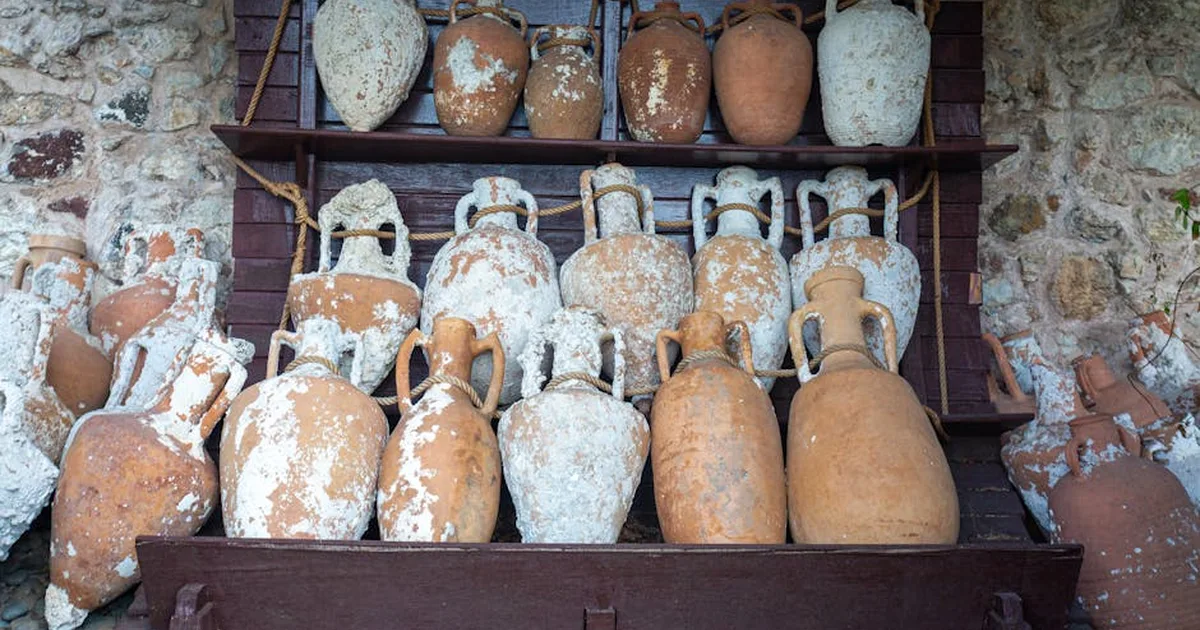
The finds from Kuntillet 'Ajrud were indeed fantastic, but none more significant than two large pithoi (storage jars) weighing approximately 30 pounds each. These now-reconstructed ceramic vessels are painted with an extraordinary array of deities, human figures, animals, and symbolic designs. Most controversially, they feature several inscriptions that reference "Yahweh and his asherah" or "Yahweh and his Asherah," depending on scholarly interpretation.
The inscriptions appear in ancient Hebrew script and include blessing formulae such as "I have blessed you by Yahweh of Samaria and by his asherah" and similar phrases that invoke both the God of Israel and this mysterious asherah. The grammatical construction has sparked intense debate: does the lowercase "asherah" refer to a cult object (an asherah pole), or does the capitalized "Asherah" indicate the Canaanite goddess herself?
The Enigmatic Bes Figures: Divine Portraits or Decorative Art?
Below one of the controversial inscriptions are drawings of two figures that scholars have definitively identified as representations of Bes, an Egyptian dwarf deity associated with protection, fertility, and warding off evil. Bes was actually a collective name for a group of similar dwarf deities popular throughout the ancient Near East, particularly in household religion and protective magic.
The central question remains: are these Bes figures meant to represent Yahweh and his consort Asherah, as some scholars have theorized? The scholar who published the definitive analysis of the drawings, Pirhiya Beck, doesn't think so. She interprets both figures as male deities—likely representations of the Egyptian god Bes rather than an attempt to portray the Hebrew God with a female consort.
Other scholars disagree with Beck's interpretation, but there is an important chronological issue: the drawings were added to the pithos after the inscriptions were written. This suggests the visual and textual elements may be completely unrelated, making any connection between the "Yahweh and his asherah" inscription and the Bes figures purely coincidental.
The Asherah Problem in Ancient Israel
The Kuntillet 'Ajrud inscriptions have reignited scholarly debate about the role of Asherah in ancient Israelite religion. Asherah was indeed a major Canaanite goddess, known as the "mother of the gods" and consort of the high god El in Ugaritic mythology. Archaeological evidence from across the Levant confirms her widespread worship throughout the Bronze and Iron Ages.
However, the Hebrew Bible presents a complex picture of Asherah's place in Israelite religion. While biblical texts consistently condemn Asherah worship as foreign idolatry, they also acknowledge its persistent presence among the Israelites. Kings like Ahab are criticized for erecting asherim (Asherah poles or trees), while reformer kings like Josiah are praised for destroying them.
The lowercase "asherah" in the Kuntillet 'Ajrud inscriptions could refer to a cult object—a wooden pole or living tree that served as a symbol of the divine presence—rather than the goddess herself. This interpretation would align more closely with biblical theology while acknowledging syncretic religious practices that may have developed in Israel's border regions.
Archaeological Context and Dating
The archaeological context of Kuntillet 'Ajrud supports a dating to the late ninth or early eighth century B.C., during the divided monarchy period when the northern kingdom of Israel and southern kingdom of Judah coexisted. This was a time of significant religious and cultural exchange between Israel and its neighbors, which may explain the syncretic elements found at the site.
The pottery types, architectural features, and paleographic analysis of the inscriptions all point to this period, making Kuntillet 'Ajrud roughly contemporary with the biblical accounts of kings like Jehu, Jehoash, and Jeroboam II in Israel, and Joash and Amaziah in Judah. This was also the era of the prophets Elisha, Joel, and early Isaiah.
The Site's Religious Function
Beyond the controversial inscriptions, Kuntillet 'Ajrud appears to have served multiple religious functions. The site contained several buildings, including what may have been a temple or shrine, storage facilities, and living quarters. The variety of religious artifacts—including altars, offering bowls, and numerous inscriptions invoking various deities—suggests it was a pilgrimage site or religious way station serving diverse populations.
The presence of inscriptions mentioning not only Yahweh but also Baal and other deities indicates a religiously pluralistic environment. This may reflect the practical realities of a border outpost where different ethnic and religious groups interacted regularly, necessitating a more inclusive approach to divine blessing and protection.
Interpretive Challenges and Scholarly Debate
Why has it taken nearly four decades to publish the final excavation report? One primary reason is that virtually everything about Kuntillet 'Ajrud and its finds is extraordinarily difficult to interpret—or even to see clearly. The pottery sherds are fragmentary, the inscriptions are sometimes poorly preserved, and the iconography draws from multiple cultural traditions, making definitive interpretation challenging.
The recently published comprehensive report represents a superb scholarly achievement, but the discussion and interpretation will surely continue far beyond its pages. Each new analysis seems to raise as many questions as it answers, ensuring that Kuntillet 'Ajrud will remain a subject of academic debate for generations to come.
Implications for Biblical Studies
The discoveries at Kuntillet 'Ajrud have significant implications for understanding the development of monotheism in ancient Israel. If the inscriptions do indeed refer to Asherah as Yahweh's consort, they would suggest that popular Israelite religion in the eighth century B.C. was more polytheistic or henotheistic than the Hebrew Bible indicates.
However, alternative interpretations that understand "asherah" as a cult symbol rather than a goddess allow for a more nuanced view: while official Israelite theology may have been moving toward monotheism, popular religious practice likely retained elements of older Canaanite traditions, particularly in border regions far from Jerusalem's religious control.
The Broader Context of Iron Age Religion
Kuntillet 'Ajrud must be understood within the broader context of Iron Age religious practice throughout the Levant. Archaeological discoveries from sites like Khirbet el-Qom, Jerusalem, and various locations throughout Israel and Judah reveal a complex religious landscape where official state religion, popular folk practices, and foreign influences intersected in ways that don't always align neatly with biblical narratives.
Rather than undermining biblical authority, these discoveries help us understand the historical contexts in which biblical texts were written and the religious challenges that prophets and reformers faced. The biblical condemnations of Asherah worship make more sense when we understand how pervasive such practices actually were.
Ongoing Research and Future Discoveries
The publication of the comprehensive Kuntillet 'Ajrud report has sparked renewed interest in similar sites throughout the region. New technologies for analyzing ancient inscriptions, improved methods for dating organic materials, and more sophisticated approaches to iconographic interpretation continue to shed light on these complex materials.
As archaeological techniques advance, future discoveries may help resolve some of the persistent uncertainties surrounding Kuntillet 'Ajrud. However, the site's primary contribution to biblical archaeology may lie not in providing definitive answers, but in forcing scholars to grapple with the complexity and diversity of ancient Israelite religious practice.
The puzzling finds from this remote Sinai outpost remind us that the development of biblical monotheism was neither simple nor uniform, occurring within a rich and complex ancient Near Eastern religious environment that included both challenges and opportunities for the emerging faith of Israel.
)

Comentarios