
In an era when truth often seems relative and faith is pushed to the margins of public life, the writings of Francis Schaeffer (1912–1984) remain surprisingly relevant. Schaeffer, a pastor, theologian, and founder of L'Abri Fellowship in Switzerland, spent his life defending the idea that Christianity speaks meaningfully to every area of human existence—science, art, morality, and spirituality. While he passed away decades ago, his insights on the fragmentation of knowledge, the lordship of Christ, and the importance of truth continue to resonate with Christians navigating a complex world.
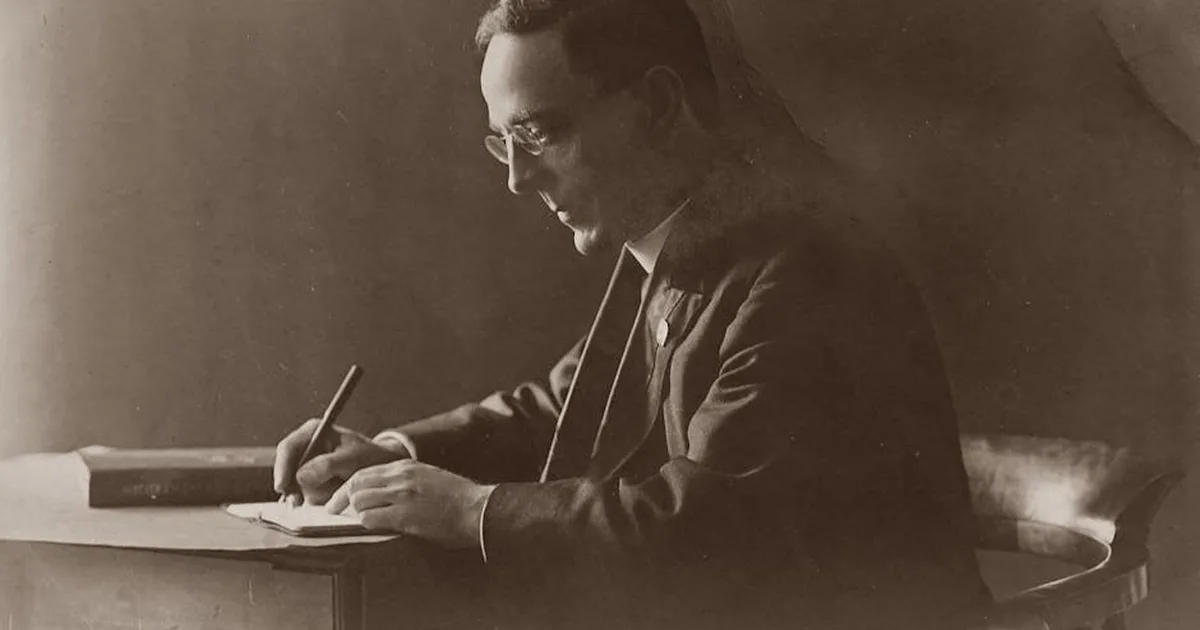
Schaeffer's core message was simple yet profound: Christianity is not just a private belief system but a comprehensive worldview that addresses the whole person. He saw how modern thought had split reality into two stories—a lower story of facts and science, where humans are reduced to machines, and an upper story of meaning and values, where reason is abandoned. For Schaeffer, the gospel alone could reunite these divided realms, offering a coherent foundation for life and thought.
The Two-Story Lie: How Modernity Fractured Knowledge
Schaeffer famously diagnosed the intellectual crisis of the 20th century as a division between what he called the 'lower story' and the 'upper story.' In the lower story, we have facts, science, and logic—but no ultimate meaning. Humans are seen as products of blind evolution, with no free will or moral responsibility. In the upper story, we find religion, art, and ethics—but these are treated as matters of personal preference, not objective truth. This split, Schaeffer argued, leaves people stranded: they can have facts without meaning, or meaning without facts.
This fragmentation is not just an academic problem. It affects how we live, how we raise our children, and how we engage with culture. When truth is reduced to what can be scientifically proven, and values are dismissed as mere opinions, society loses its moral compass. Schaeffer's response was to insist that God, who is there and has spoken in Scripture, provides a unified foundation for both facts and values. The Bible presents a coherent story of creation, fall, redemption, and restoration that makes sense of all reality.
True Spirituality: Yielding Everything to Christ
At the heart of Schaeffer's teaching was the concept of 'true spirituality.' He believed that authentic Christian living is not about following rules or having mystical experiences, but about applying the finished work of Christ to every moment of life. In his essay 'How I Have Come to Write My Books,' Schaeffer wrote that the cross has a 'moment-by-moment, present meaning' for believers. This means that Christ's lordship extends over every area—our thoughts, our work, our relationships, and our culture.
True spirituality, for Schaeffer, was inseparable from the pursuit of truth. He rejected the idea that faith and reason are enemies. Instead, he argued that Christianity is a rational faith that can be defended with logic and evidence. At the same time, he emphasized that knowing truth is not enough—it must be lived out in love and humility. Schaeffer's L'Abri community was a living example of this integration: a place where seekers could ask hard questions and find honest answers, surrounded by a community that took both truth and love seriously.
Inerrancy and the Authority of Scripture
Schaeffer's commitment to truth led him to defend the inerrancy of Scripture—the belief that the Bible is without error in its original manuscripts. For him, this was not a dry doctrinal point but a matter of practical importance. If the Bible is not trustworthy, then Christianity loses its foundation. Schaeffer argued that the Bible's authority extends to all areas it addresses, including history, science, and morality. He saw the erosion of biblical authority in the church as a direct threat to the gospel's power.
This conviction shaped Schaeffer's engagement with culture. He believed that Christians must not retreat into a private spiritual world but must engage the intellectual challenges of their time with confidence in God's truth. His critique of modern art, philosophy, and politics was always grounded in a robust view of Scripture. While some may disagree with his specific conclusions, his call for Christians to think biblically about every aspect of life remains timely.
Lordship of Christ Over All of Life
Schaeffer's emphasis on the lordship of Christ was a natural outgrowth of his view of Scripture. If Christ is Lord, then he has authority over every sphere—family, work, government, and culture. Schaeffer rejected the idea that faith is only about personal salvation or church attendance. Instead, he insisted that Christians are called to be agents of transformation in the world, applying biblical principles to every area of life.
This vision of lordship led Schaeffer to address controversial issues like abortion, euthanasia, and the erosion of religious freedom. He was a key figure in the early pro-life movement, arguing that the sanctity of human life is rooted in the image of God. But his concern was not limited to political activism. He urged Christians to create art, music, and literature that reflect the beauty and truth of the gospel—not just to critique the world, but to offer a compelling alternative.
Why Schaeffer Still Matters Today
In a world that is increasingly polarized and skeptical, Schaeffer's integrated vision of faith and reason offers a path forward. Many Christians today feel torn between a faith that seems irrelevant to public life and a culture that dismisses religious truth. Schaeffer reminds us that the gospel speaks to both the mind and the heart, and that we do not have to choose between being intellectually honest and spiritually alive.
His critique of the 'two-story' lie is more relevant than ever. As we see the consequences of a society that has lost its moral bearings—from the breakdown of the family to the rise of identity politics—Schaeffer's call to build a Christian worldview that engages culture with grace and truth is urgent. He challenges us to be people who not only believe the truth but live it out in love, humility, and courage.
Practical Application: Living Out the Truth
How can we apply Schaeffer's insights today? Start by examining your own life: are there areas where you have compartmentalized your faith, treating it as a private matter rather than a comprehensive worldview? Consider how your faith shapes your work, your relationships, and your engagement with culture. Read Scripture with an eye for its coherence and authority, and seek to understand how it speaks to the issues of our day.
Engage with the questions people are asking. Like Schaeffer, we can create spaces—whether in our homes, churches, or online—where honest seekers can find answers. We do not need to have all the answers, but we can point to the One who is the Truth. And as we do, we must do so with love, remembering that truth without love is harsh, and love without truth is hollow.
Finally, let Schaeffer's example inspire you to be a faithful presence in your community. Whether through your vocation, your volunteer work, or your daily conversations, you can demonstrate that Christianity is not a retreat from reality but a robust engagement with it. As the apostle Paul wrote, 'We take every thought captive to obey Christ' (2 Corinthians 10:5, ESV). That is the heart of Schaeffer's legacy—and a calling for every believer today.





Comentarios