
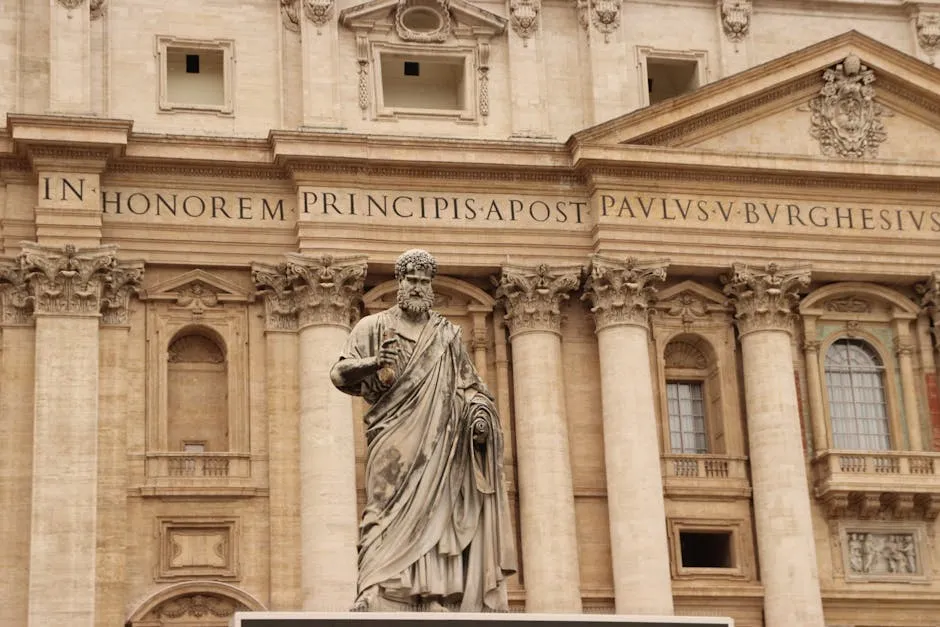
In a moment that beautifully illustrated the global reach of Catholic compassion, Pope Leo XIV recently made a significant visit to the Vatican's replica of the Lourdes grotto while offering a heartfelt "shout-out" to the faithful gathered in Chiclayo, Peru, for the World Day of the Sick. This convergence of sacred geography—from Rome to France to South America—reminds us that Christ's healing ministry knows no boundaries and that Mary's maternal care extends to every corner of the earth.
The Sacred Geography of Healing
The Pope's visit to the Vatican's Lourdes grotto carries profound significance that extends far beyond a simple ceremonial gesture. This replica, nestled within the Vatican Gardens, serves as a constant reminder of Mary's promise at Lourdes: "I am the Immaculate Conception." When Bernadette Soubirous first encountered the beautiful lady in 1858, she could hardly have imagined that her experience would inspire healing sanctuaries and pilgrimages worldwide.
As Jesus declared in the Gospel of Matthew, "Come to me, all you who are weary and burdened, and I will give you rest" (Matthew 11:28). The grotto at Lourdes—and its Vatican counterpart—represents a physical manifestation of this divine invitation, a place where the suffering can bring their burdens to Mary, who leads them ultimately to her Son.
"And Mary said, 'My soul glorifies the Lord and my spirit rejoices in God my Savior, for he has been mindful of the humble state of his servant.'" - Luke 1:46-48
The World Day of the Sick: A Global Observance
Established by Saint John Paul II in 1992, the World Day of the Sick is observed annually on February 11th—the feast of Our Lady of Lourdes. This intentional connection between Mary's apparition at Lourdes and the Church's special attention to the sick emphasizes the Marian dimension of healthcare ministry.
The choice of Chiclayo, Peru, as the focal point for the 2024 observance reflects the Church's commitment to highlighting the needs and faith of Catholics in developing nations. Peru, with its rich indigenous traditions and deep Marian devotion, represents millions of faithful who face health challenges without access to advanced medical care but who possess extraordinary faith and resilience.
Peru: A Nation of Faith and Resilience
When Pope Leo spoke directly to "those who are gathering in Chiclayo, Peru," he was addressing a community that embodies the intersection of profound faith and significant healthcare challenges. Chiclayo, located in northern Peru, serves a region where many indigenous communities maintain traditional healing practices alongside Catholic faith, creating a unique synthesis of spirituality and medicine.
The people of Peru have a special devotion to the Virgin Mary under various titles, including Our Lady of the Assumption (patron of the country) and Our Lady of Mercy. This Marian devotion provides a cultural bridge to the healing ministry of Lourdes, making the Pope's spiritual connection particularly meaningful.
As the Psalmist wrote, "He heals the brokenhearted and binds up their wounds" (Psalm 147:3). In Peru, where many face physical ailments compounded by poverty and limited medical access, this promise takes on profound significance.
The Maternal Protection of Mary
The Pope's entrustment of "all of you, especially the sick and their families, to the maternal protection of the Blessed Virgin Mary" reflects a fundamental Catholic understanding of Mary's role in the ministry of healing. Mary is not seen as a healer in her own right, but as the perfect intercessor who brings our needs to her Son.
This maternal aspect of Mary's care is particularly evident at Lourdes, where she appeared not as a distant figure but as a mother who cares for her children's physical and spiritual wellbeing. The healing waters of Lourdes have been attributed to numerous physical cures, but perhaps more importantly, they have provided spiritual healing and comfort to millions of pilgrims.
"When Jesus saw his mother there, and the disciple whom he loved standing nearby, he said to her, 'Woman, here is your son,' and to the disciple, 'Here is your mother.'" - John 19:26-27
Universal Healthcare Through Spiritual Means
The Pope's simultaneous attention to Lourdes and Peru highlights an often-overlooked dimension of Catholic social teaching: the Church's commitment to healthcare as both a corporal and spiritual work of mercy. While advocating for improved medical access and social justice, the Church also recognizes that healing encompasses more than physical cure.
This holistic approach to healing reflects Jesus' own ministry, where physical miracles were always accompanied by spiritual restoration. When Christ healed the paralytic, he first said, "Son, your sins are forgiven" (Mark 2:5) before addressing the physical ailment. This integration of spiritual and physical healing remains central to Catholic healthcare ministry worldwide.
The Science and Faith of Lourdes
The Vatican's recognition of Lourdes' healing ministry is notable for its rigorous approach to claimed miracles. The Lourdes Medical Bureau, established in 1883, applies strict scientific criteria to investigate reported cures, requiring exhaustive medical documentation and multiple expert evaluations before any healing is considered potentially miraculous.
This careful balance between faith and science reflects the Catholic Church's commitment to truth in all its forms. As Pope Leo XIII wrote in his encyclical "Providentissimus Deus," "Truth cannot contradict truth." The Church's approach to Lourdes demonstrates that authentic faith need not fear scientific scrutiny but can embrace it as a means of discerning God's authentic action in the world.
Pilgrimage in an Interconnected World
The Pope's ability to spiritually unite the Vatican, Lourdes, and Peru in a single gesture illustrates how modern communication technology can enhance rather than replace traditional pilgrimage. While physical pilgrimage to Lourdes remains powerful and transformative, the Church recognizes that not all faithful can make such journeys.
This reality is particularly relevant for the people of Peru and other developing nations, where economic constraints make European pilgrimage impossible for most Catholics. The Pope's spiritual connection creates a form of virtual pilgrimage that transcends geographical and economic barriers while maintaining authentic spiritual significance.
Healthcare as Mission
The emphasis on Peru during the World Day of the Sick also highlights the Church's healthcare mission in Latin America. Catholic hospitals, clinics, and healthcare workers throughout Peru provide essential services to underserved populations, often representing the primary healthcare option for rural and indigenous communities.
These healthcare missionaries embody the Gospel mandate to "heal the sick" (Matthew 10:8) while also providing the compassionate presence that reflects Mary's maternal care. Their work demonstrates that the healing ministry of Lourdes extends far beyond the French shrine to wherever Catholics serve the sick and suffering.
"Praise the Lord, my soul, and forget not all his benefits—who forgives all your sins and heals all your diseases." - Psalm 103:2-3
The Integration of Prayer and Medicine
The Pope's gesture also affirms the compatibility of prayer and modern medicine. Rather than viewing spiritual and medical interventions as competing approaches, the Catholic tradition sees them as complementary responses to human suffering. The sick are encouraged to seek appropriate medical care while also turning to prayer and the intercession of Mary and the saints.
This integrated approach is particularly relevant in Peru, where traditional healing practices, modern medicine, and Catholic faith often intersect in complex ways. The Church's recognition of this complexity reflects a mature understanding of how culture, faith, and healthcare interact in diverse global contexts.
A Universal Call to Compassion
Perhaps most significantly, the Pope's connection between Lourdes and Peru extends an invitation to Catholics worldwide to see healthcare and healing ministry as universal callings. Whether serving in advanced medical centers or rural clinics, whether praying at renowned shrines or humble home altars, all Catholics are called to participate in Christ's healing ministry.
This universality reflects the Catholic understanding of the Church as truly global—a communion that transcends national, economic, and cultural boundaries. When the Pope speaks from Vatican City to pilgrims in Peru, he embodies this universal dimension while affirming the particular needs and gifts of local communities.
Hope in the Face of Suffering
The World Day of the Sick, celebrated with special attention to Peru, offers hope to all who face illness, disability, or caregiving responsibilities. It reminds us that suffering, while never desired, can become a means of spiritual growth and solidarity with Christ's passion.
As Saint Paul wrote, "We know that in all things God works for the good of those who love him" (Romans 8:28). This doesn't minimize the reality of suffering or suggest that all illness serves a divine purpose, but it does affirm that God can bring good even from the most difficult circumstances.
Looking Forward: The Continuing Ministry
As the Church continues to observe the World Day of the Sick and maintain its global healthcare ministry, the connection between Lourdes and places like Peru serves as a reminder of both continuity and evolution. The fundamental message of Mary at Lourdes—God's special care for the suffering—remains constant, while its expression adapts to diverse cultural contexts and contemporary challenges.
The Pope's shout-out to Peru is more than a ceremonial gesture; it's a recognition of faith lived courageously in challenging circumstances and an affirmation that the Church's healing ministry belongs wherever Catholics serve the sick and suffering. From the grotto in Vatican City to the communities of Chiclayo, the same maternal protection of Mary extends to all who seek healing and hope.
In this global community of faith, every Catholic becomes a potential pilgrim, every prayer becomes a spiritual journey, and every act of care for the sick becomes a participation in the ongoing miracle of God's love made manifest through human compassion.

Commentaires