
The Eucharist is the center of Christian life, the sacrament that unites us deeply with Jesus Christ. Instituted at the Last Supper, when the Lord took bread and wine and said, 'This is my body... this is my blood' (Matthew 26:26-28), the Eucharist is not merely a symbol but the real presence of Christ among us. For Christians of all traditions, sharing in the Lord's Supper is a moment of encounter, communion, and renewal of faith.
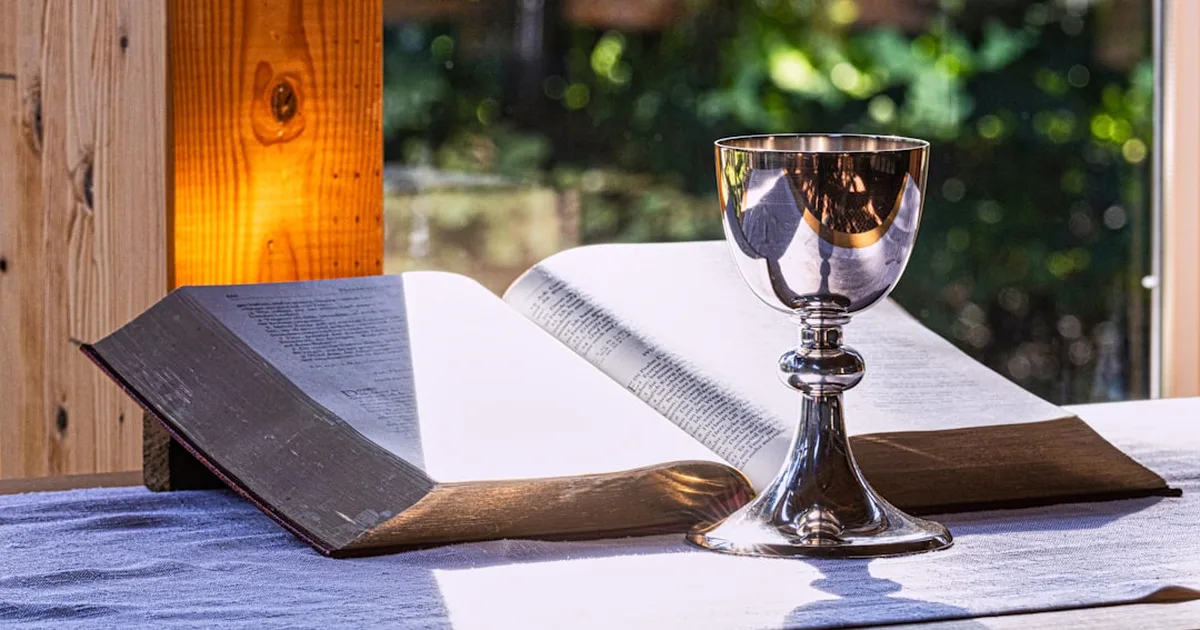
In the early church, the disciples gathered on the first day of the week to break bread (Acts 20:7). This practice continues today, reminding us that the Eucharist is the food that sustains our spiritual journey. By receiving Christ's body and blood, we are strengthened to live according to the Gospel and witness God's love in the world.
The Eucharist as a Sacrament of Unity
The Eucharist calls us to unity. The apostle Paul teaches, 'Because there is one bread, we who are many are one body, for we all partake of the one bread' (1 Corinthians 10:17). When we approach the Lord's table, we are reminded that we belong to a larger family—the Church of Christ. Our denominational or cultural differences do not matter; in the Eucharist, we find the central point of our common faith.
In such a divided world, the Eucharist invites us to reconciliation. Before offering the sacrifice, Jesus washed the disciples' feet, teaching us humility and service (John 13:14-15). Thus, every Eucharistic celebration is a call to forgive, love, and serve one another. Communion with Christ moves us to build bridges, not walls.
Living the Eucharist Daily
Participating in the Eucharist is not limited to Sunday. The Eucharistic life extends to every act of love, generosity, and forgiveness. When we help someone in need, listen to a suffering friend, or choose peace over discord, we make Christ's body present in the world. The Eucharist transforms us into 'broken bread' for others.
To prepare for communion, set aside time for silence and prayer. Confess your sins, seek reconciliation with those you have hurt, and open your heart to receive God's grace. Remember Jesus' words: 'I am the bread of life. Whoever comes to me will never be hungry' (John 6:35).
The Eucharist in Church History
From the earliest centuries, the Eucharist has been celebrated with reverence. Christians gathered in homes to 'break bread' and pray (Acts 2:42). Over time, the liturgy developed, but the core remained the same: thanksgiving to God for Christ's redemptive work. Today, amid modern challenges, the Eucharist continues to be the beating heart of the Christian faith.
Pope Francis, who passed away in April 2025, often spoke of the Eucharist as 'medicine for the soul' and 'source of hope.' His successor, Pope Leo XIV, elected in May 2025, has also emphasized the importance of a faith centered on the Eucharist, especially in times of crisis. The Church, in its wisdom, has always renewed Jesus' invitation: 'Do this in remembrance of me' (Luke 22:19).
Conclusion: An Invitation to the Lord's Table
Dear brother, dear sister, the Eucharist is a gift of love. No matter where you are on your spiritual journey—whether you are firm in faith or feel distant from God—the Lord's table is always open. Jesus awaits you with open arms, offering the bread of life and the cup of salvation.
May the Eucharist be for you not merely a ritual but a transformative encounter with the living Christ. May it renew your strength, illuminate your path, and unite you with the communion of saints. Amen.
Reflection: How can you make the Eucharist more present in your daily life? What step can you take today to live in deeper communion with Christ and with your brothers and sisters?



Comentarios