
Few questions are more fundamental to human experience than whether we possess genuine free will. If our thoughts, decisions, and actions are merely the inevitable results of prior physical causes, then moral responsibility, praise, blame, and punishment become meaningless concepts. Yet our deepest intuitions and the entire structure of human society depend on the reality of free choice.
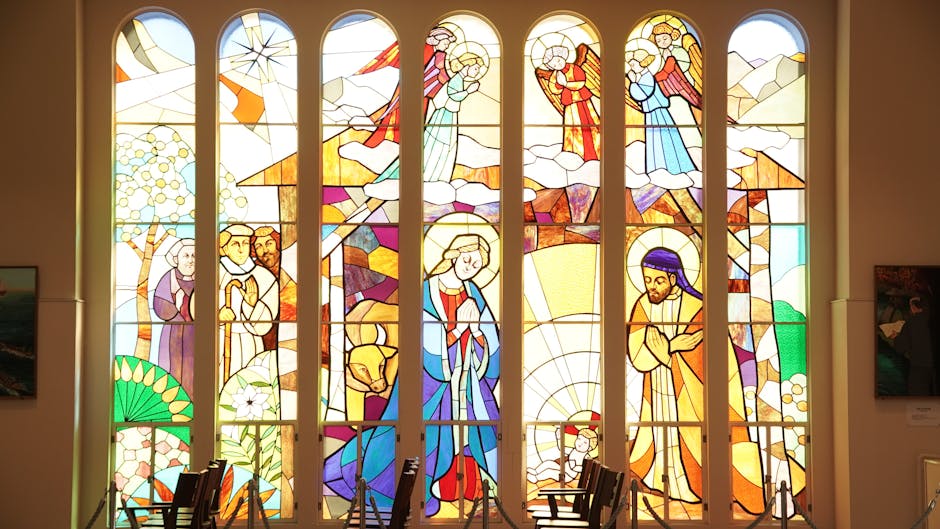
Pope Leo XIV has emphasized that "human freedom is not an illusion but a reflection of the divine image within us, enabling genuine love, moral responsibility, and meaningful relationship with our Creator."
The Challenge of Materialist Determinism
If the universe consists only of matter and energy governed by natural laws, and if human beings are simply complex arrangements of atoms, then every thought and decision appears to be the inevitable result of prior physical states.
This mechanistic worldview suggests that the feeling of choosing between alternatives is an illusion—we inevitably do what the laws of physics determine.
The Consequences of Hard Determinism
If hard determinism were true, it would undermine: Moral responsibility (no one could be truly guilty or praiseworthy). Justice systems (punishment and reward would be pointless). Personal relationships (love requires freely choosing the other). Self-improvement efforts (change would be impossible). The meaning of human life (we would be mere sophisticated robots).
The Intuition of Freedom
Human experience consistently points toward genuine freedom of choice. When facing decisions, we feel that multiple options are genuinely open to us. We experience deliberation, weighing reasons, and making choices that could have been different.
This universal human experience of agency deserves serious philosophical consideration rather than dismissal as mere illusion.
The Performative Contradiction
Hard determinists face a logical problem: if their beliefs are merely the result of physical processes rather than rational evaluation of evidence, why should we trust their arguments?
The very act of making rational arguments presupposes that minds can evaluate reasons and change beliefs based on evidence—which requires some form of freedom.
Quantum Indeterminacy and Freedom
Modern physics has revealed that the universe is not mechanistically determined. Quantum mechanics shows that physical events at the microscopic level involve genuine randomness, not merely our ignorance of hidden causes.
While quantum randomness does not directly prove free will (random events are not free choices), it does undermine strict physical determinism and opens conceptual space for other forms of causation.
Emergence and Downward Causation
Complex systems often exhibit emergent properties not present in their individual components. Human consciousness and decision-making may represent forms of emergence that, while dependent on physical processes, are not reducible to them.
Just as software programs exercise "downward causation" over computer hardware, human minds may influence brain states in ways that transcend simple bottom-up physical determinism.
Agent Causation vs. Event Causation
Traditional determinism assumes that all causation involves events causing other events according to natural laws. However, free will may involve a different type of causation—agent causation, where persons cause actions without themselves being entirely determined by prior events.
This libertarian understanding of freedom allows for genuine choice while maintaining that free actions are caused (by agents) rather than random.
The Soul and Immaterial Mind
Christian anthropology maintains that humans possess immaterial souls that transcend purely physical processes. If the soul can influence brain activity while not being entirely determined by it, genuine free will becomes possible.
This dualistic understanding provides a metaphysical foundation for human freedom that pure materialism cannot offer.
Compatibilism: A Middle Way?
Some philosophers argue that free will is compatible with determinism if we properly understand what freedom means. On this view, free actions are those that flow from our own desires, values, and character—even if these are themselves determined.
While compatibilism preserves some notion of freedom, critics argue that it fails to capture what we really mean by free choice and moral responsibility.
Ultimate Responsibility
True moral responsibility seems to require that we be the ultimate source of our actions in some meaningful sense. If our characters, desires, and values are entirely the product of factors beyond our control, ultimate responsibility becomes questionable.
Biblical Teaching on Human Freedom
Scripture consistently assumes human freedom and responsibility: God commands and forbids, implying genuine choice. Humans are praised for obedience and blamed for sin. People can choose to accept or reject God's grace. Individuals can change their behavior and character.
While the Bible acknowledges human limitations and the influence of sin on decision-making, it never suggests that moral choice is an illusion.
Divine Sovereignty and Human Freedom
The relationship between God's sovereignty and human freedom raises complex theological questions. However, most Christian traditions maintain that God's control over history is compatible with genuine human choice, even if the precise mechanism remains mysterious.
Neuroscience and Free Will
Some neuroscientists argue that brain imaging studies disprove free will by showing that brain activity precedes conscious awareness of decisions. However, these studies typically involve trivial choices (when to move one's finger) rather than complex moral decisions.
The relationship between brain activity and consciousness remains largely mysterious, and current neuroscience cannot definitively resolve questions about free will.
Correlation vs. Causation
Even if brain states correlate perfectly with mental states, this does not prove that brain activity causes thoughts and decisions. The correlation could reflect the soul's influence on the brain rather than vice versa.
Moral Arguments for Free Will
The reality of moral obligation provides strong evidence for free will. "Ought" implies "can"—we cannot have genuine duties unless we have the ability to fulfill or violate them.
The universal human experience of moral accountability suggests that freedom is not merely a philosophical theory but a practical reality upon which human society depends.
Love and Relationship
Genuine love requires freedom to choose the beloved over alternatives. If our affections are entirely determined, they become mere biological programs rather than authentic personal relationships.
God's love for humanity and his desire for our freely given love in return presuppose real freedom of choice.
The Problem of Evil Revisited
Free will provides the traditional Christian answer to the problem of evil—God permits moral evil because genuine goodness requires freedom to choose evil. This defense works only if libertarian free will is real.
If determinism were true, God would be ultimately responsible for all evil since he created the initial conditions that inevitably lead to it.
Practical Implications
Belief in free will has significant practical consequences: It supports moral responsibility and justice systems. It encourages personal growth and self-improvement efforts. It validates the practices of praise, blame, and accountability. It provides hope that people can change destructive patterns. It grounds the meaningfulness of human choices and relationships.
Living as Free Agents
Whether or not we can prove free will philosophically, we cannot help but live as if we possess it. Every deliberation, decision, and plan presupposes that our choices matter and can influence the future.
Conclusion: The Gift of Choice
While the debate over free will continues in philosophical and scientific circles, the Christian faith maintains that human freedom is both real and precious—a reflection of our creation in God's image and a prerequisite for genuine moral and spiritual life.
This freedom carries great responsibility but also great dignity. We are not mere products of impersonal forces but agents capable of moral choice, spiritual growth, and meaningful relationship with God and neighbor. In preserving and exercising this freedom wisely, we honor both our Creator and ourselves as bearers of the divine image.





Comentarios