
In the life of the Christian community, there are moments that invite pause and reflection. Recently, the Holy See has decided to temporarily suspend some canonization causes, including that of Father Walter Ciszek, an American Jesuit who endured years of imprisonment in Soviet labor camps. This decision does not represent a judgment on the personal holiness of these servants of God, but rather an act of prudence and discernment that characterizes the Church's journey through the centuries.
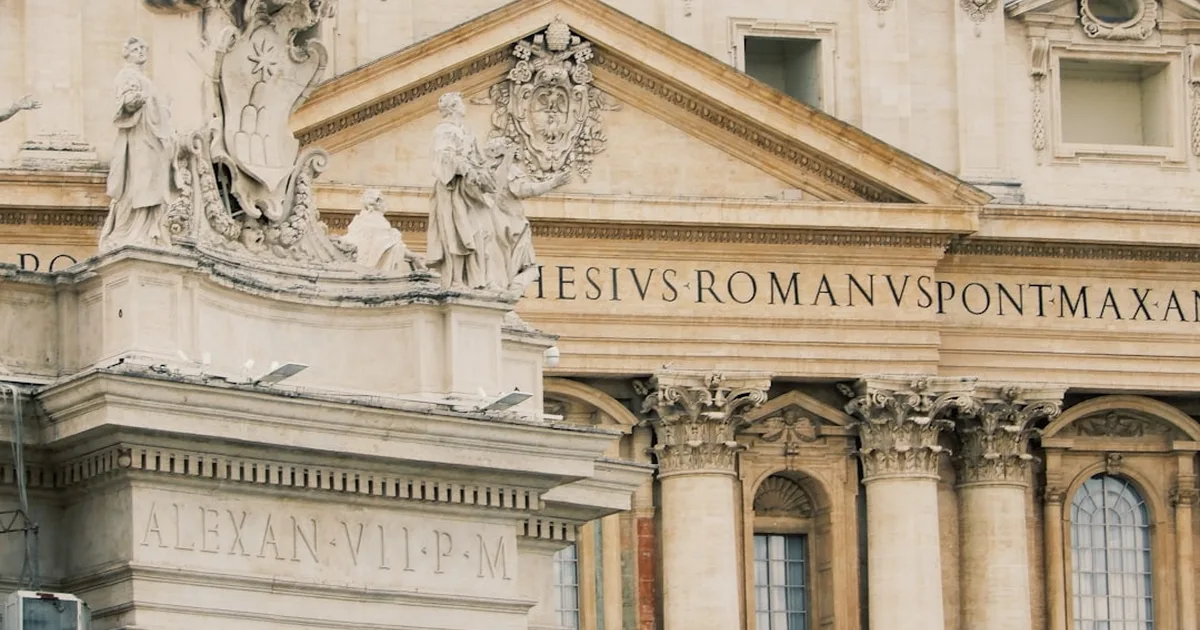
As a community of faith, we are called to understand that canonization processes are not simple administrative procedures, but paths of verification that require time, attention, and above all prayer. The Church, like a caring mother, wants to ensure that every witness of faith is presented to the faithful with the greatest possible clarity and certainty.
This approach reminds us of the words of the Apostle Paul: "Test everything; hold fast what is good" (1 Thessalonians 5:21, ESV). Discernment is not a lack of trust, but an expression of pastoral responsibility toward all God's people.
The Meaning of Discernment in Christian Tradition
The practice of discernment has deep roots in biblical tradition and Church history. Already in the Old Testament we find the invitation to "choose life" (Deuteronomy 30:19, ESV), while in the New Testament Jesus himself exhorts us to be "wise as serpents and innocent as doves" (Matthew 10:16, ESV).
Throughout Church history, canonization processes have evolved over time, becoming increasingly rigorous and attentive. This development does not stem from distrust, but from the desire to ensure that the models of holiness presented to the faithful are authentic and verified. As Saint Paul wrote: "Do not quench the Spirit. Do not despise prophecies, but test everything; hold fast what is good" (1 Thessalonians 5:19-21, ESV).
Communal discernment is a gift of the Holy Spirit to the Church. Pope Francis, in his apostolic exhortation "Gaudete et Exsultate," reminded us that "holiness is the most attractive face of the Church" (n. 9), but also that the recognition of saints requires time and verification. Now, under the pontificate of Pope León XIV, this attention to discernment continues with the same spirit of pastoral care.
Testimony That Transcends Processes
It is important to emphasize that suspending a canonization cause does not erase the life testimony of a servant of God. The life of Father Walter Ciszek, with his twenty-three years of imprisonment and his faithfulness to Christ in extreme circumstances, remains a powerful witness of faith that can inspire believers today.
As the Letter to the Hebrews reminds us: "Remember your leaders, those who spoke to you the word of God. Consider the outcome of their way of life, and imitate their faith" (Hebrews 13:7, ESV). The life testimony of God's servants speaks beyond formal processes, touching the hearts of those seeking models of authentic faith.
Canonizations as Signs of Unity in Diversity
EncuentraIglesias.com, as an ecumenical platform, recognizes that canonizations are a specific practice of the Catholic tradition, but veneration of witnesses of faith is a common heritage of all Christian communities. Luther, Calvin, Wesley, and many other reformers are remembered and studied in various Protestant traditions, while the Anglican Communion maintains its calendar of saints.
This diversity of approaches should not divide, but rather enrich ecumenical dialogue. As the Apostle Paul writes: "Now there are varieties of gifts, but the same Spirit; and there are varieties of service, but the same Lord" (1 Corinthians 12:4-5, ESV). Different Christian traditions express their veneration for witnesses of faith in diverse ways, but all share the recognition that holiness is the work of the Holy Spirit in believers' lives.
In this context, the pause in some canonization causes can be seen as an invitation to all Christian communities to deepen spiritual discernment, remembering that holiness is not primarily an institutional recognition, but a personal and communal response to God's call.


Comments