
Dear friend, today I invite you to join me on a journey through the book of Hebrews—a letter that speaks of the greatness of Jesus Christ and the hope we have in Him. Written for believers facing trials, this epistle reminds us that Jesus is superior to angels, to Moses, and to the Levitical priesthood. Its message is as relevant today as it was then, calling us to persevere in faith, holding fast to the promise of the new covenant.
In a world full of uncertainties, the letter to the Hebrews offers a sure anchor for the soul. Through this study, we will discover how Jesus, our Great High Priest, opened a direct path to God. Get ready to dive into the depths of this teaching, which will strengthen your faith and fill you with hope.
Christ's Superiority: The Heart of Hebrews
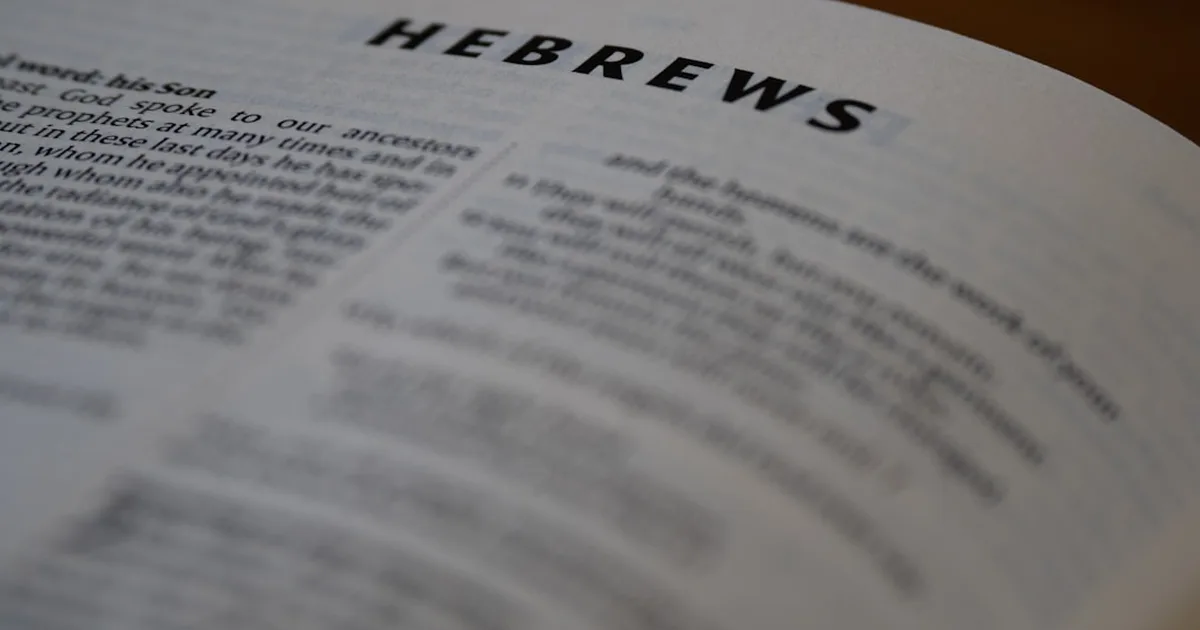
The first chapter of Hebrews clearly establishes Christ's divinity: "In the past God spoke to our ancestors through the prophets at many times and in various ways, but in these last days he has spoken to us by his Son" (Hebrews 1:1-2, NIV). Jesus is the exact representation of God's nature, and his message is superior to that of angels and prophets.
Jesus, Superior to Angels
Angels are servants of God, but the Son is heir of all things. In Hebrews 1:4-5, the author quotes Psalm 2:7 to show that Jesus is the unique Son. This section invites us to reflect on the majesty of Christ and to worship Him as He deserves. In our study of Hebrews, we cannot overlook this foundational truth: Jesus is God incarnate, and His sacrifice is sufficient for our salvation.
Jesus, Superior to Moses
Moses was a faithful servant in God's house, but Christ is the Son over the house (Hebrews 3:5-6). While Moses mediated the law, Jesus brought grace and truth. This comparison encourages us to trust in Jesus as the mediator of the new covenant, a covenant based on better promises. In our study, we see that Christ's faithfulness calls us to persevere, holding firmly to our confidence to the end.
The New Covenant and Christ's Priesthood
Hebrews 8:6-7 tells us: "But in fact the ministry Jesus has received is as superior to theirs as the covenant of which he is mediator is superior to the old one, since the new covenant is established on better promises." The old covenant was imperfect, but the new covenant, sealed with Christ's blood, offers total forgiveness and direct access to God.
Jesus, High Priest in the Order of Melchizedek
The author of Hebrews spends several chapters explaining Christ's priesthood, comparing Him to Melchizedek, who was both priest and king (Hebrews 7:1-3). Unlike the Levitical priests, Jesus is a priest forever, without needing to offer repeated sacrifices. His one sacrifice was sufficient for all time. This is a central point in our study: Christ's finished work gives us confidence to approach God.
The Heavenly Sanctuary
Hebrews 9:11-12 describes Christ entering the heavenly sanctuary, not with the blood of animals, but with His own blood, securing eternal redemption. This reminds us that our faith is not based on earthly rituals, but on Jesus' perfect work. In our study, we learn that the temple veil was torn, giving us free access to the Father.
Practical Application: Living in Light of Hebrews
After delving into doctrine, the author urges us to act. "Let us then approach God's throne of grace with confidence, so that we may receive mercy and find grace to help us in our time of need" (Hebrews 4:16, NIV). This verse is a beacon of hope: we can pray freely, knowing that Jesus understands us.
Furthermore, Hebrews 10:23-25 encourages us to hold unswervingly to the hope we profess, to spur one another on toward love and good deeds, and not to give up meeting together. In a time when many feel isolated, this call to community is vital. As we study Hebrews, may we be inspired to live out our faith with perseverance, encouraging one another as we await the return of our Great High Priest.




Comments